
Bloated Stomach: Why Your Belly Looks Distended
Authored by Bodyful Physical Therapy and Wellness
Do You Feel Bloated or Notice a Distended Stomach?
Do you often feel bloated after meals?
Does your stomach look distended after eating, especially during times of stress?
Is it worse at the end of the day?
Do you have a history of chronic constipation, SIBO, or IBS?
Do you experience stomach pain and bloating and feel like you are always bloated, no matter what you eat?
If you have been dealing with these symptoms — and especially if you have worked with a gastroenterologist and dietician — yet you are still experiencing abdominal distension and bloating, it may be time to explore whether abdomino phrenic dyssynergia (also called abdominal phrenic dyssynergia) is contributing to your symptoms.
Pelvic floor PTs are movement experts with extensive medical and clinical training. This means that we can assess and diagnose movement patterns suggesting abdomino phrenic dyssynergia and guide you through appropriate abdomino phrenic dyssynergia exercises.
The pelvic floor is part of the core, and so are the abdominal wall and the respiratory diaphragm. Because of this relationship, digestion, bloating, and abdominal distention often overlap with pelvic floor function — and fall well within the scope of pelvic floor physical therapy.
How Are Bloating and a Distended Stomach Connected to the Core?
Emerging research shows that bloating and abdominal distention are not always digestive or dietary issues alone. They can also have biomechanical and nervous system components.
To understand stomach pain and bloating more clearly, it helps to first distinguish between bloating and distention, which are often used interchangeably but are not the same.
Bloating vs. Distention: What’s the Difference?
Bloating is the sensation of pressure, fullness, or discomfort in the abdomen.
Importantly, studies show that in many people who report bloating, imaging does not reveal increased gas volume.
This suggests that bloating is often related to visceral hypersensitivity—meaning the nervous system becomes more reactive to normal changes in gas or fluid. This sensitivity may develop after inflammation, surgery, illness, or trauma, and reflects how closely the nervous system and gut function are connected.
In the absence of impacted stool and IBS, people who complain of bloating tend to avoid fully exhaling when they perceive or anticipate bloating, and this can make the symptoms worse.
It may also weaken your core.
Distention, on the other hand, is a visible and physical change in the abdominal wall.
The stomach appears larger, stretched taut, or protruded.
Bloating and distention frequently occur together. When the brain perceives discomfort in the gut, it may respond by changing breath patterns—allowing the abdominal wall to reciprocally soften and move away from the source of sensation in an attempt to reduce discomfort.
Abdomino-Phrenic Dyssynergia and a Distended Stomach
This abdominal wall response can lead to a pattern known as abdomino-phrenic dyssynergia.
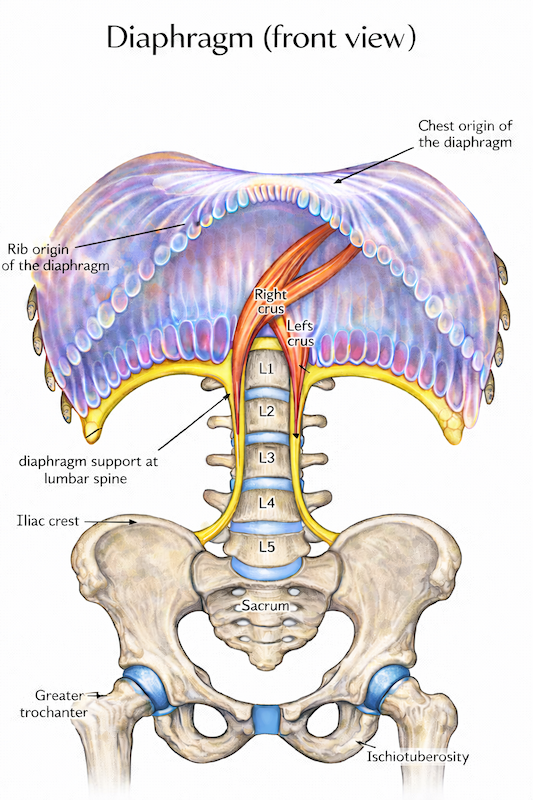
Front view of diaphragm with pelvis
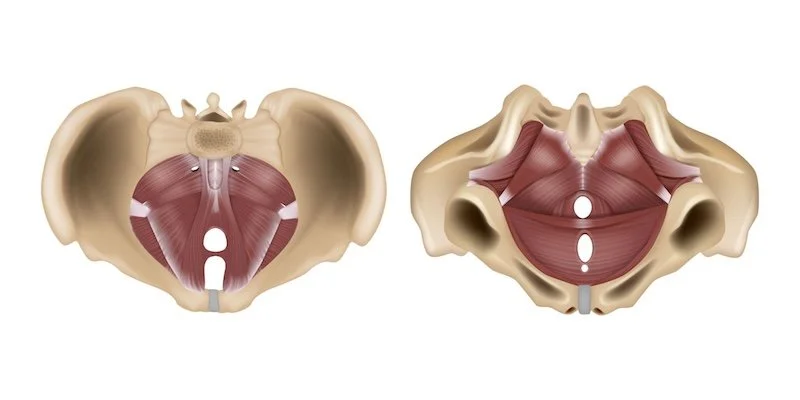
Anatomy of the pelvic floor muscles.
In this pattern:
The abdominal wall weakens, bulges during inhale, or reflexively relaxes outward
The respiratory diaphragm does not engage sufficiently during the inhalation
Low back tissues become stiff, making it harder for the diaphragm and abdominal muscles to support posture
When this happens, several things are affected:
Gas movement through the digestive tract becomes less efficient
The diaphragm loses its ability to support the lumbar spine and activate the abdominal cylinder
Coordination between the diaphragm and pelvic floor is disrupted
This can contribute not only to ongoing stomach bloating and distention, but also to pelvic floor symptoms, constipation, GERD, and difficulty fully evacuating bowel movements.
For many people who feel always bloated, this pressure and coordination pattern — not just food — may be the missing piece.
Why Breathing and Abdominal Coordination and Strength Reduce Bloating
When the diaphragm is not consistently fully relaxing and fully contracting:
Digestive motility can slow
Pressure regulation through the abdomen becomes insufficient
Pelvic floor muscles may struggle to perform appropriately for bowel movements and activities
This can create a cycle where stomach pain, bloating, and constipation reinforce one another.
This is why treatment for abdominal phrenic dyssynergia may begin with restoring coordination and integrating the new movement pattern into your postural activities.
How Pelvic Floor Physical Therapy Can Help Bloating and Distention
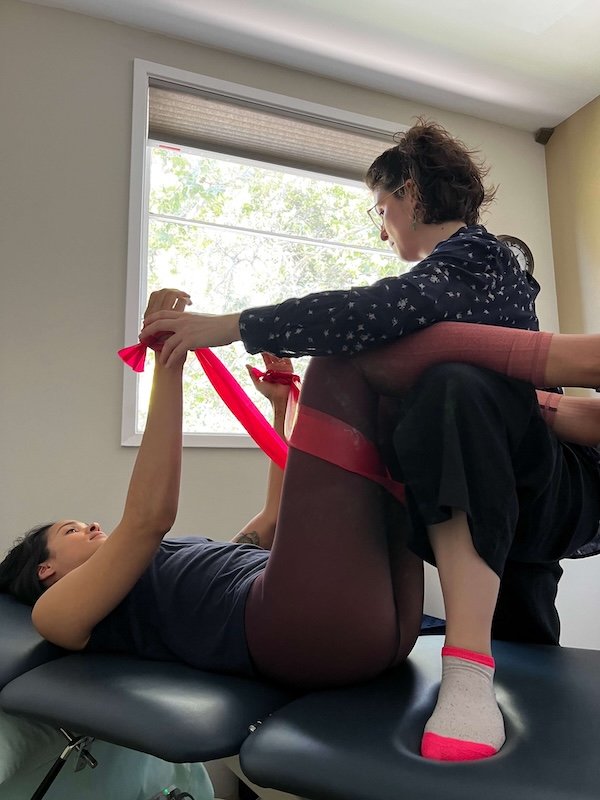
Dr. Maryssa teaching postural stabilization with intra-abdominal pressure management training
Treatment for abdomino-phrenic dyssynergia focuses on restoring coordination, as the precursor to proper strengthening and functional relaxation.
At Bodyful, we address this through:
Skilled hands-on fascial work to the diaphragm and abdominal tissues
Nervous system–informed manual therapy to improve tissue adaptability
Individualized movement and breathing practices
Progressive, specific abdomino phrenic dyssynergia exercises tailored to your body
These approaches stimulate mechanoreceptors that help retrain how the diaphragm and abdominal wall respond to pressure.
The key components include:
Diaphragmatic breathing to restore respiratory and lumbar stabilization functions
Coordinated abdominal muscles to support abdominal tone and functional strength
Integration with pelvic floor muscles to improve bowel movements and core strength
This combination allows the digestive system to move more efficiently while reducing the sensation of bloating and the appearance of a distended stomach.
When practicing a program that progressively and specifically trains your coordination, these abdomino phrenic dyssynergia exercises help retrain abdominal wall behavior — reducing visible distention while decreasing the sensation of bloating.
The exercises allow the digestive system to move more efficiently while reducing both the sensation of being bloated and the appearance of a distended stomach.
When Diet Isn’t the Whole Story
While nutrition often plays a role, persistent stomach bloating, abdominal distention, and constipation often require addressing movement patterns, breathing mechanics, and nervous system regulation.
If you have already tried dietary changes without meaningful improvement, you are certain you do not have impacted stool, and you are not diagnosed with IBS, exploring these underlying contributors may offer a very successful direction forward.
Interested in Learning More?
If your stomach feels bloated, your abdomen looks distended, or you experience ongoing stomach pain and bloating alongside constipation or pelvic floor symptoms, pelvic floor physical therapy may be a helpful next step.
Book with us to learn more about working together and exploring whether this approach is right for you.
Reference
Damianos JA, Tomar SK, Azpiroz F, Barba E. Abdominophrenic Dyssynergia: A Narrative Review. Am J Gastroenterol. 2023 Jan 1;118(1):41-45. doi: 10.14309/ajg.0000000000002044. Epub 2022 Sep 30. PMID: 36191283; PMCID: PMC9810002.