
Safe Core Exercises | Diastasis Recti Physical Therapy
Do you want safe, enjoyable core exercises for diastasis recti that actually support your whole body? We offer core stabilization exercises through physical therapy that respect healing, restore confidence, and help you move without fear.
Heal Diastasis Recti Naturally—with Guidance That Makes Sense
You’ve probably heard a lot of conflicting advice about rectus abdominis muscle separation after pregnancy. Some of it can sound alarming or restrictive.


If you want clear guidance on:
Returning to exercise safely
Caring for your abdomen and core
Lifting your baby without worsening low back pain, stress urinary incontinence, or pelvic organ prolapse
—you’re in the right place.
You don’t need to avoid movement forever. And you don’t need to be afraid of your core.
We help you return to exercise with ease, confidence, and strength, in a way that feels empowering, embodied, and sustainable.

What Is Diastasis Recti?
To understand diastasis recti, it helps to picture the linea alba—a band of connective tissue that runs from the sternum to the pubic bone. This tissue integrates the rectus abdominis, transverse abdominis, and internal and external oblique muscles.
During pregnancy, the abdominal wall experiences:
Mechanical stretch and load
Hormonal softening from estrogen and relaxin
Diastasis recti abdominis (DRA) is defined as a separation of the two bellies of the rectus abdominis along this midline.
Although diastasis rectus abdominis symptoms are common, research shows there is no single agreed-upon cause. Factors like age, delivery method, and number of pregnancies are not clearly established risk factors (Gluppe et al., 2021).
What is clear: symptoms matter more than measurements alone.
Common Symptoms We See with Diastasis Recti
Diastasis recti does not exist in isolation. Many people experience related symptoms such as:
Low back pain or pelvic girdle pain
Constipation or difficulty with bowel movements
Stress urinary incontinence
Feelings of pelvic pressure or pelvic organ prolapse
Abdominal doming or instability with movement
This is why a full-body, abdominal pressure-aware approach matters.

Does Pelvic Physical Therapy Help Diastasis Recti?
Yes—and research continues to support it.
A 2021 randomized controlled trial found that an exercise program including curl-ups did not worsen diastasis recti or increase pelvic floor disorders, low back pain, or pelvic pain. It did improve abdominal muscle strength and thickness (Gluppe et al., 2021).
A 2022 RCT showed that real-time virtual exercise programs improved inter-recti distance, trunk stability, and quality of life—supporting the effectiveness of telehealth pelvic physical therapy (Kim et al., 2022).
A 2023 study suggested that myofascial therapy can reduce rectus abdominis separation, improve pelvic floor muscle dysfunction, enhance lumbar function, relieve pain, and improve daily function (Wang et al., 2023).
We offer in-person and online diastasis recti physical therapy based on these principles.
How Long Does Treatment Take?
Most clients work with us for about three months.
Treatment length varies by person, but you can expect:
Effective care starting at your first visit
Noticeable symptom improvement within 2–3 months
Long-term tools for managing pressure, posture, and movement
Visits can be in person or online. Internal pelvic floor therapy is offered in person, though we can guide self-assessment and external strategies virtually when appropriate.
Strength and endurance take time—but when they return, symptoms like leaking, back pain, and abdominal discomfort often resolve significantly.
Our Approach to Diastasis Recti Physical Therapy
1. Breathing & Pressure Assessment
We perform an in-depth breathing assessment that looks at posture, rib mobility, and respiratory diaphragm function during real-life movements. This is foundational for managing intra-abdominal pressure and supporting both the core and pelvic floor.
2. Fascial & Manual Therapy
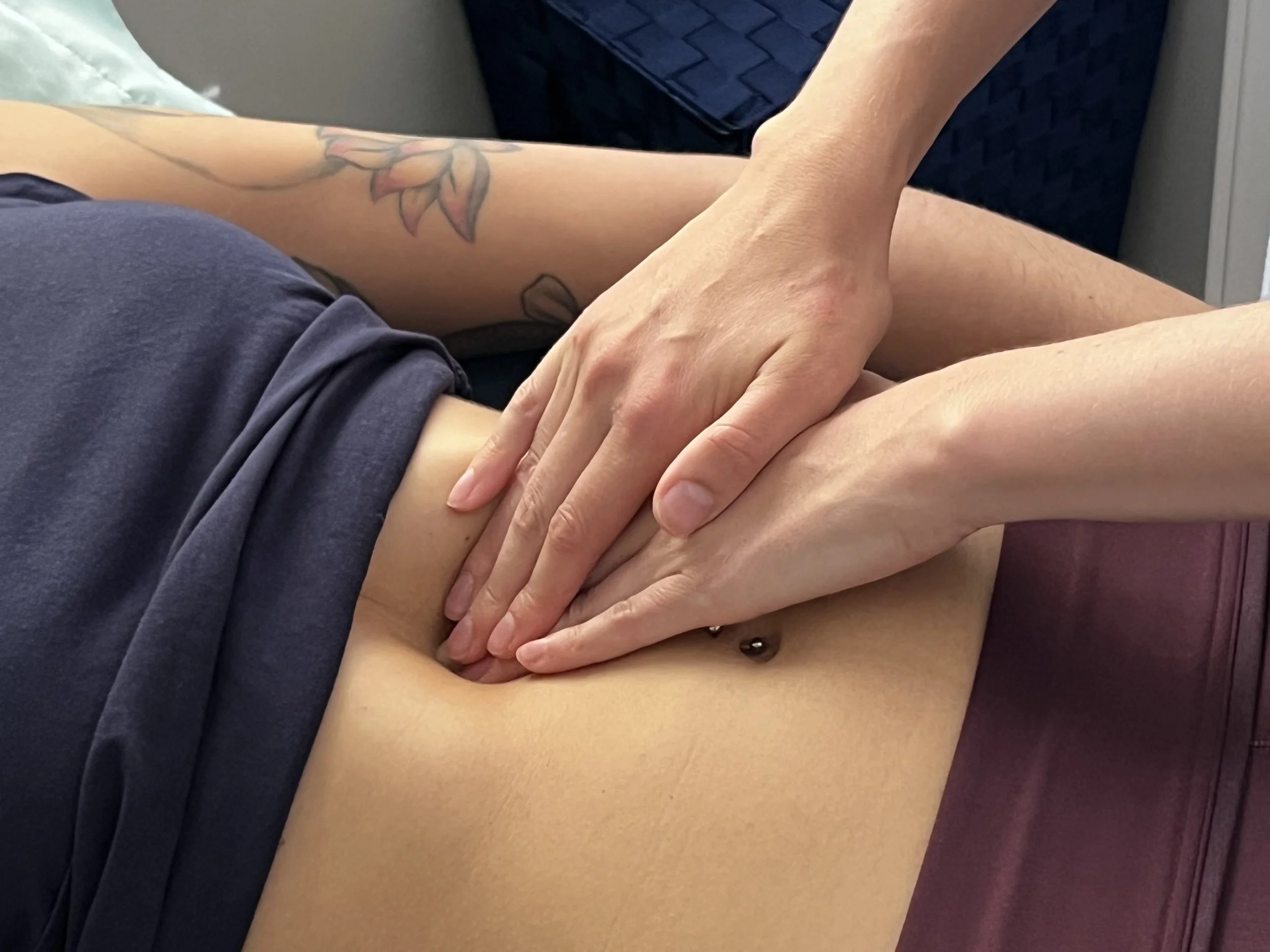
We offer skilled manual therapy including myofascial mobilization and visceral fascial work. Therapeutic touch can release tension, improve circulation, and enhance body awareness.
Manual therapy is followed by:
Therapeutic exercise cues
Functional movement training
Nervous system support for lasting change
We also address tension patterns in the neck, back, hips, and abdomen—helping you recognize and soften habits that contribute to symptoms like constipation, pain, or pressure.
3. Intra-Abdominal Pressure Management & Core Exercises
Diastasis recti is rarely just about “weakness.” It’s often about how pressure is managed through the abdominal wall and pelvic floor.
We focus on:
Posture analysis
Dynamic stabilization
Total-body integration
Core exercises that support continence and prolapse prevention
This approach helps you return to exercise—and daily life—with confidence, ease, and joy.