
Get Relief from Bowel Issues with Pelvic Floor PT
Pelvic physical therapy can help if you’re dealing with constipation, bloating, bowel urgency, or leakage. Many bowel issues are not just about diet or fiber—they’re about coordination between your breath, abdominal wall, diaphragm, and pelvic floor.
Pelvic Physical Therapy Can Help With:
Pelvic floor therapy for constipation
Stomach feels bloated “all the time”
Abdominal and abdomino-phrenic dyssynergia
Exercises that help relieve constipation
Bowel urgency
Fecal incontinence
Gas incontinence
Leaking stool during pregnancy (including third trimester)
Anal pain or spasms with bowel movements
Nausea associated with GERD


“How Do I Poop Correctly?”
If you’ve ever wondered this, you’re not alone—and it’s a very common question.
Your pelvic floor muscles play an important role in controlling stool and gas and in supporting digestion by eliminating waste. The anus and rectum are highly sensitive structures that communicate with your brain to tell you whether there is gas, stool, or diarrhea present.
A healthy bowel movement requires coordinated effort between:
Your respiratory diaphragm
Your posture
Your abdominal wall
Your colon
Your pelvic floor muscles
In simple terms:
Can you breathe while relaxing your pelvic floor enough to allow your abdominal wall to assist, without straining or holding your breath?
When this coordination is off—as with pelvic floor tension or abdomino-phrenic dyssynergia—you may experience constipation, bloating, incomplete emptying, or a visibly distended abdomen.
Pelvic Floor Therapy for Constipation & Bloating
We work with your nervous system, breath mechanics, and muscle coordination.
Our approach includes:
Somatic movement and verbal approaches to gently connect with your relationship to your pelvic floor
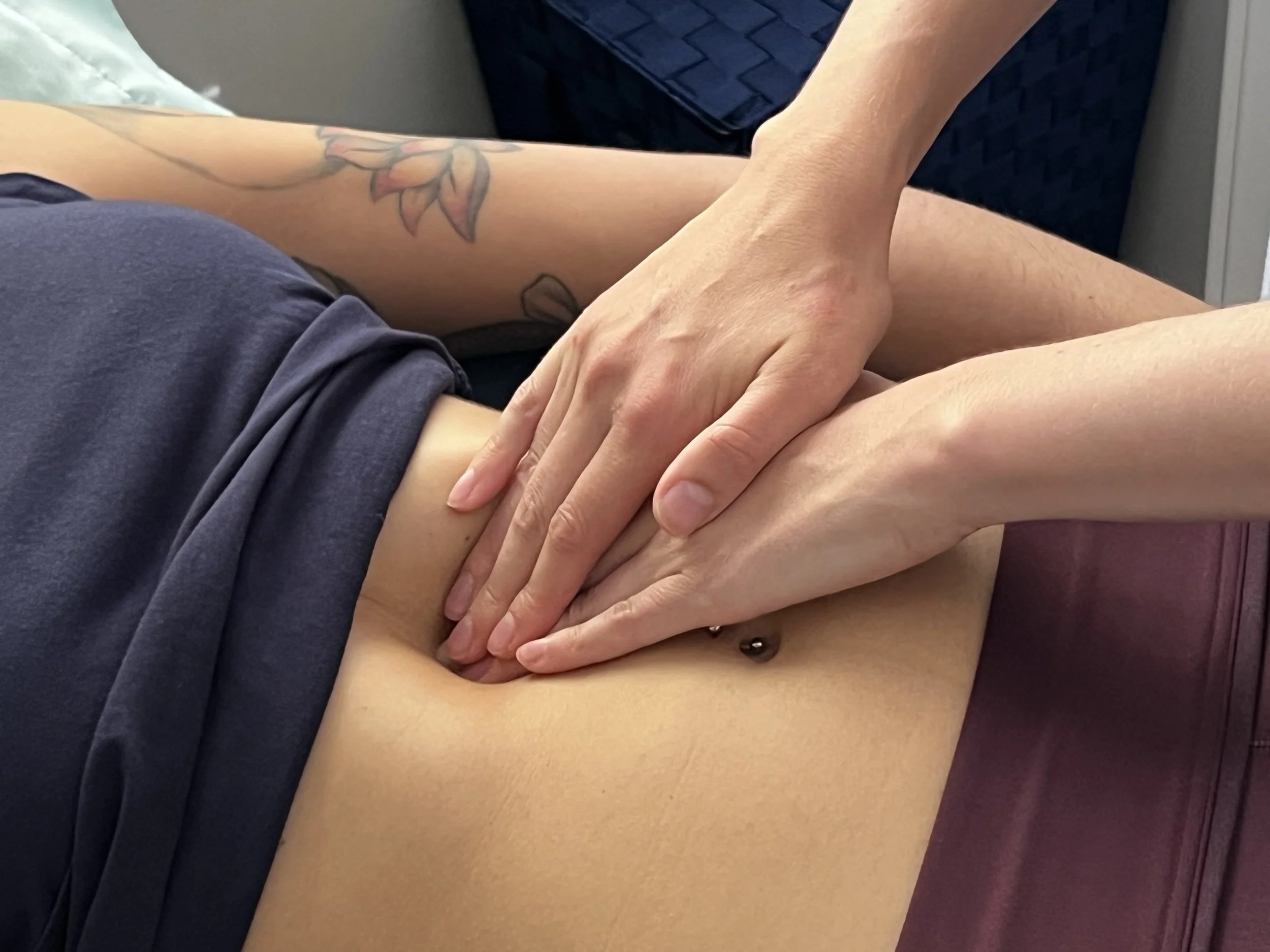
Skilled therapeutic touch to assess and treat pelvic health, including internal work when appropriate
Visceral and fascial mobilization to support bowel movement and abdominal mobility
Movement and posture training to reduce straining and improve bowel mechanics
Hip mobility and gluteal muscle support for pelvic health
Individualized home exercises that help relieve constipation and abdominal bloating and fit into real life
This is far more than “Kegels.”
Many people notice changes within 2–4 visits, with more lasting improvement over about 3 months as your body relearns efficient bowel mechanics.

Constipation During Pregnancy
Constipation is very common during pregnancy.
As your posture changes and a growing baby adds load to your pelvis:
Pelvic floor muscles work harder
Hormones slow digestion
There is less space for your organs to move freely
Straining, breath-holding, and incomplete bowel movements often follow. Pelvic physical therapy can help you learn how to poop with less effort and more coordination, which also supports smoother labor and delivery.
If bowel movements feel hard or strained during pregnancy, pelvic PT is encouraged. If you’re pooping with ease, your body is better prepared for birth.

Postpartum Bowel Changes

After having a baby, pelvic floor sensation, coordination, and endurance may change.
A pelvic physical therapist can assess:
Breath support
Abdominal and pelvic floor relaxation and strength
Awareness and coordination
Strength and endurance needed to reach the bathroom in time
How posture and movement affect bowel control
This comprehensive screening helps address constipation, urgency, leakage, and rectal and tailbone pain postpartum.