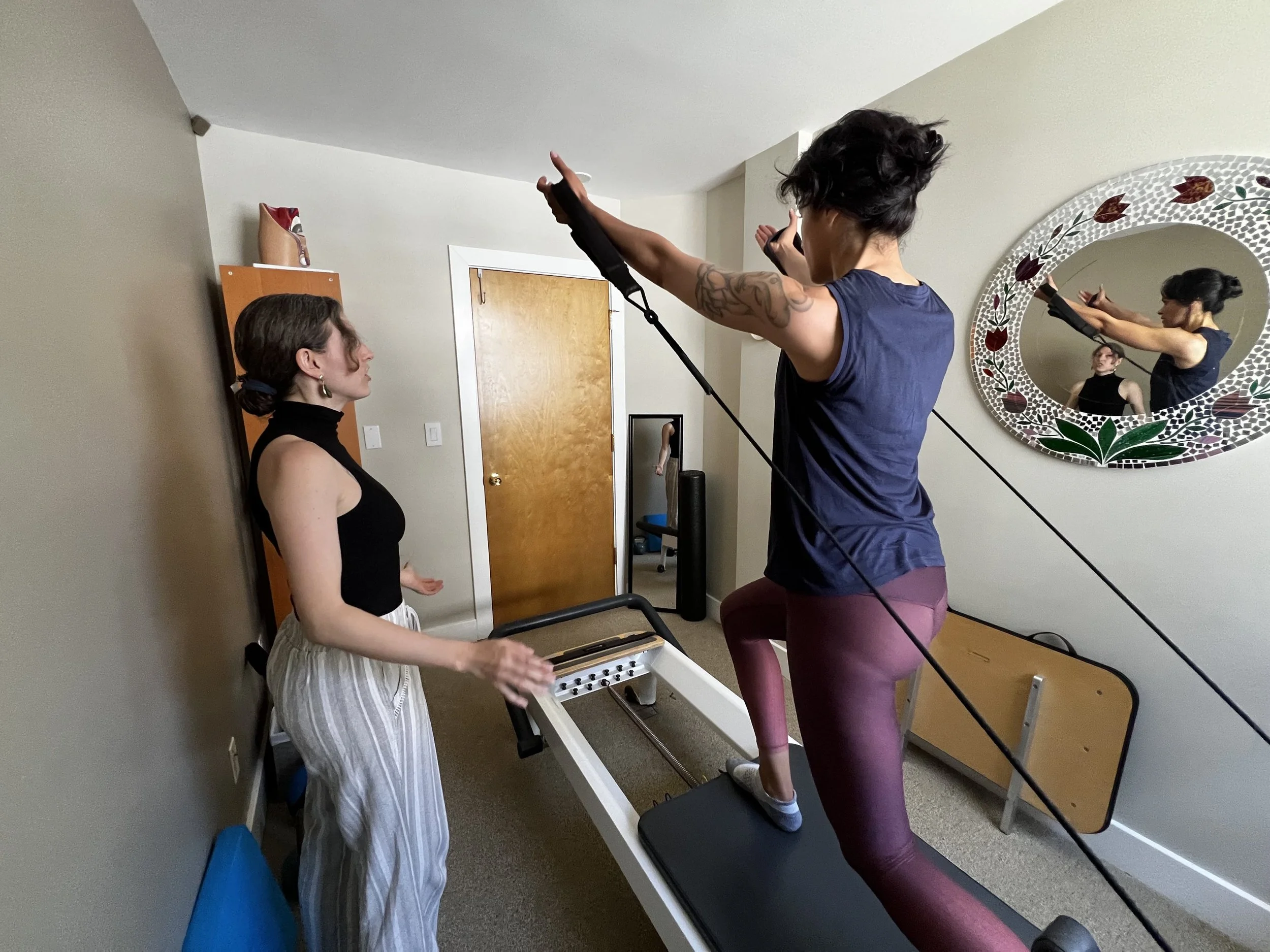
Personalized Somatic Pilates for Pelvic Health
Somatic Pilates Reformer Privates for Pelvic Pain in Oakland, CA
It is not uncommon for folks to develop pelvic pain as a result of Pilates. Many traditional Pilates cues and imagery can unintentionally create excessive tension in the abdomen and pelvic floor—especially for people already navigating postpartum recovery, pelvic floor dysfunction, persistent pelvic pain, or hormonal transitions such as postpartum and perimenopause. Over time, this can contribute to symptoms such as mismanaged intra-abdominal pressure, pain, or guarding that may feel confusing or discouraging, particularly if you were told Pilates was supposed to help.
With the right coaching and approach, however, Pilates has the potential to be deeply restorative, therapeutic, and supportive for pelvic health—especially when it aligns with principles used in pelvic physical therapy and modern pain science.
At Bodyful, Dr. Karah has developed a personalized method of somatic Pilates that allows you to safely return to Pilates—whether that’s private reformer sessions or group classes—with individualized cues, thoughtful modifications, and a biomechanically informed approach. This work is especially supportive for people seeking movement that complements pelvic physical therapy or addresses joint pain, stiffness, pelvic organ prolapse, leaking with coughing, and body changes during perimenopause.
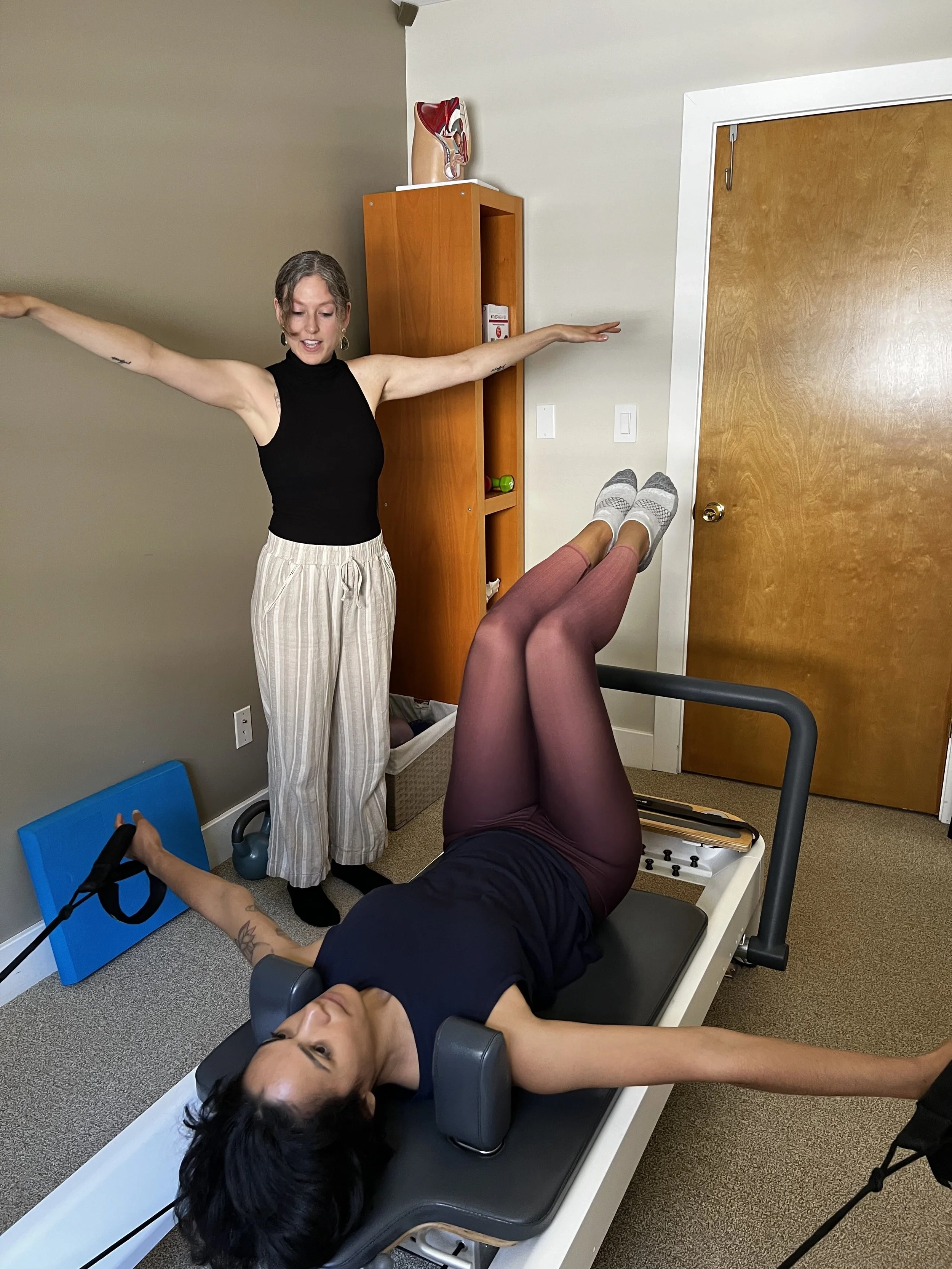
Somatic Pilates for Perimenopause, Pelvic Health, and Joint Pain
During perimenopause, hormonal shifts can affect tendon strength, connective tissue resilience, muscle recovery, and pain sensitivity. Many people notice aching joints, hip and back stiffness, knee pain, or discomfort with exercise that previously felt supportive.
A somatic Pilates reformer approach can help during this transition by emphasizing:
Efficient load sharing across joints
Breath-supported core and pelvic floor coordination
Reduced gripping in the abdomen, hips, and jaw
Movement variability to support joint health and nervous system regulation
Rather than pushing through pain or forcing alignment, sessions are paced and adapted to support joint comfort, pelvic stability, and confidence in movement—especially during hormonal change.
Somatic Pilates for Pelvic Pain, Prolapse, and Diastasis Recti
Pelvic pain, pelvic organ prolapse, and diastasis recti can all be safely and effectively addressed in Pilates reformer workouts—when the approach is holistic. These conditions are common, but that does not mean they are normal, inevitable, or something you have to push through.
For some people, Pilates becomes most helpful after learning foundational strategies through pelvic floor physical therapy, such as breath coordination, intra-abdominal pressure management, and postural support. For others, somatic Pilates serves as a gentle re-entry into movement when traditional exercise has felt overwhelming or aggravating.
Exercise can make a meaningful difference in how your body feels and functions. It simply needs to be done in a way that respects your pelvic floor, abdominal wall, nervous system, and whole-body coordination.
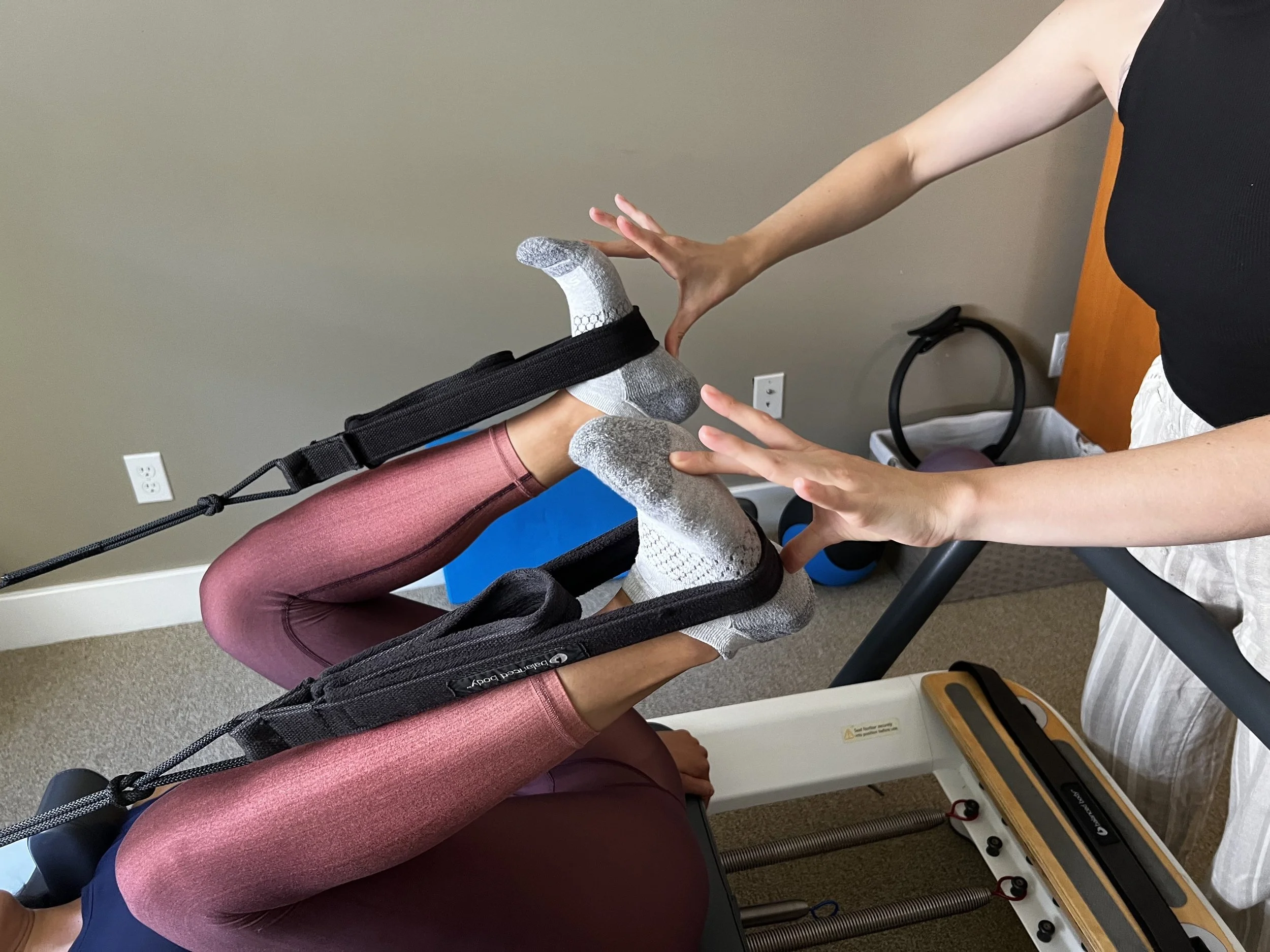
A somatic and biomechanically informed Pilates Reformer practice moves beyond “belly to spine” cues and excessive gripping. There is more to the story. When movement is guided with awareness, adaptability, and appropriate progressive loading, Pilates can support strength, ease, and confidence—without worsening pelvic symptoms.

-
Yes! As long as you have clearance from your MD for exercise, you can participate in somatic Pilates reformer sessions. This work can be helpful to prep you for labor, delivery, and postpartum recovery!
-
Yes! Oftentimes these issues are due to pelvic floor muscles being too tight. Unfortunately, typical Pilates classes focus more on lifting and “kegels” and have less focus on regulating and relaxing the pelvic floor. With somatic Pilates, you will learn how to find a balance in these muscles for healthy function and decreased symptoms.
-
No! For most people, the pelvic floor and core are too tight. Somatic Pilates will focus on returning full range of motion to these muscle groups. Dr. Karah is also trained in a unique approach to core strengthening called DNS and you will learn how to organize your core more as a pressure system which is optimal for long term health.