

Postpartum Physical Therapy in Oakland, CA
When To Start Postpartum PT After Birth?
-

3 Weeks Postpartum: Virtual Pelvic Floor Therapy or In-Person Care
Virtual pelvic floor therapy visits are available as early as 3 weeks postpartum and are effective for reducing urinary incontinence and restoring pelvic floor coordination with your movements.
This option is appropriate if you’re experiencing:
Neck, shoulder, back pain
Constipation
Early postpartum pelvic pain
Virtual pelvic floor therapy focuses on breath coordination, posture, nervous system integration, and guided pelvic floor exercises that will improve healing — without internal exams.
-
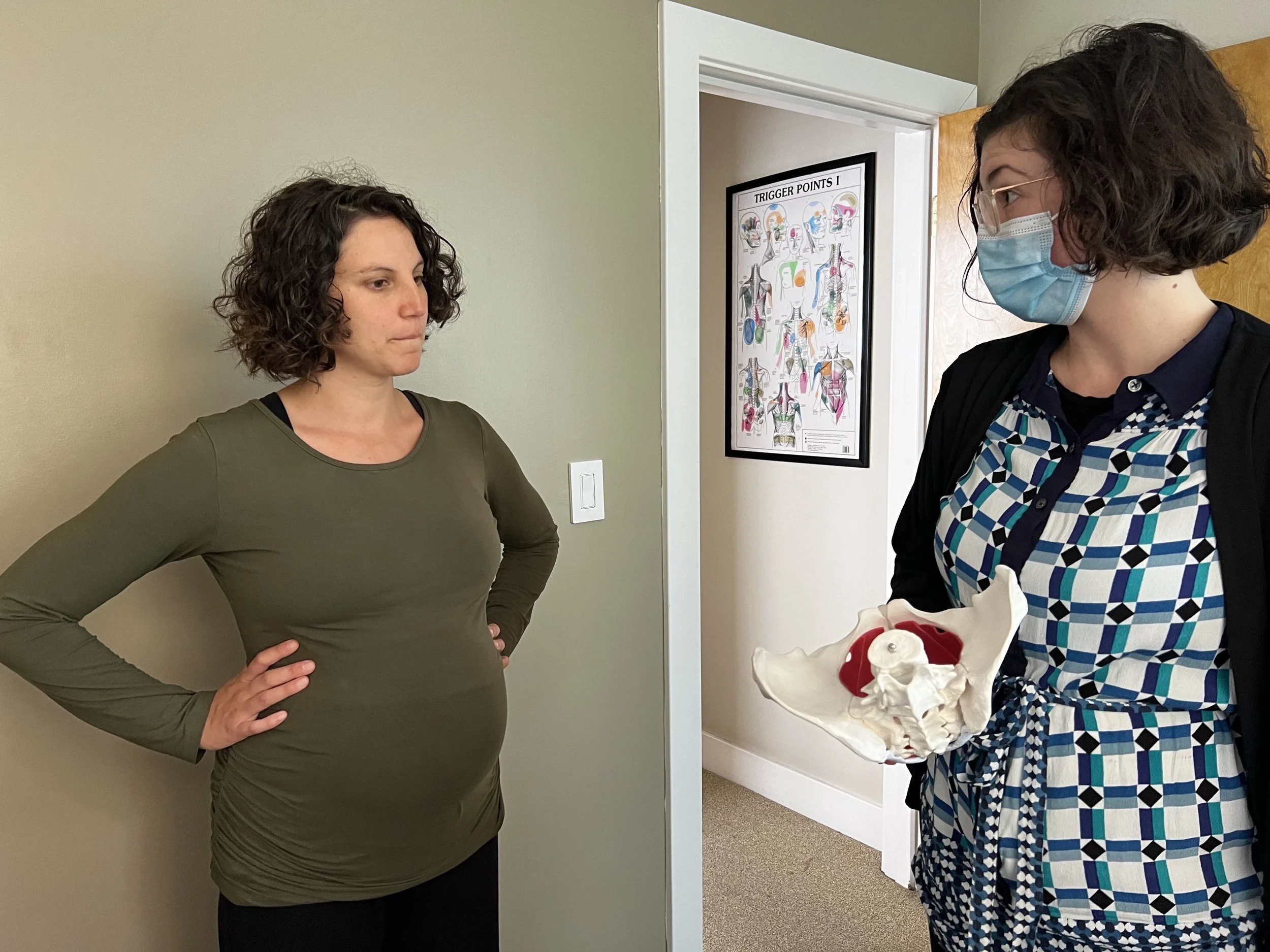
Beyond 6 Weeks Postpartum
Pelvic floor PT is generally appropriate after 6 weeks postpartum, following clearance from your OB-GYN to return to exercise and penetrative sex.
Pelvic floor therapy allows for comprehensive evaluation and treatment of:
Pain with penetrative sex
Deep pain during penetrative sex
Cervix pain during sex
Burning sensation during and after sex
Burning pee after sex
Vaginal irritation after sex
Coccygeal pain (tailbone pain)
Postpartum sacrum pain
SI joint pain postpartum
Sciatic pain after C-section
Pelvic organ prolapse (POP) symptoms
Postpartum pelvic floor physical therapy supports healing after spontaneous or induced vaginal or cesarean births by addressing pain, urinary leakage, pelvic organ support, and nervous system integration. Whether you’re newly postpartum, navigating pelvic pain 3 months postpartum, or had your babies decades ago, care can be both effective and restorative when it’s trauma-sensitive and individualized.
We offer pelvic floor PT in Oakland, CA, with both online and in-person options, based on where you are in your recovery.
What Are the Signs of Weak Pelvic Floor Muscles After Childbirth?
Signs of pelvic floor weakness may include:
Vaginal heaviness or pressure after physical exertion including lifting, coughing, and any prolonged activity.
Urinary incontinence with coughing, jumping, or running
Fecal urgency
Flatulence incontinence
Your post-pregnancy posture may also benefit from retraining so the pelvic floor muscles can recruit effectively under physical stress.
Importantly, pelvic floor muscles can be both tight and weak. Prolonged tension reduces blood flow and coordination over time. If you experience constipation, urinary urgency or frequency, pain with vaginal penetration, or pain with sex, your pelvic floor may be overactive and tense, causing weakness.
“How to tell if pelvic floor is tight or weak?”A pelvic floor PT assessment helps determine whether symptoms are driven by tension, weakness, coordination challenges, nervous system protection or other physiological factors — so treatment matches what your body actually needs.
What Can Cause Burning Pain During Sex After C-Section?

After cesarean delivery, inflammation, increased myofibroblast activity, and binding between the layers surrounding your organs can restrict movement once the incision has healed.
Scars are like icebergs — much deeper than what we see on the surface, especially with C-section scars.
Restricted tissue mobility can limit movement of nearby muscles and joints and reduce blood flow, contributing to:
Deep pain during sex
Cervix pain during sex
Abdominal pain or bloating
Bladder or bowel dysfunction
Pelvic floor physical therapy and scar-specific manual therapy have been shown to reduce pain over time. Our approach is gentle, slow, and trauma-sensitive, honoring both your tissue healing and your lived experience.
Back Pain, SI Joint Pain, and Pubic Symphysis Pain After Delivery
Sacroiliac joint (SIJ) and pubic symphysis pain are common postpartum and are a significant cause of postpartum activity and participation limitations.
Some individuals with persistent pelvic pain postpartum may also experience fear of movement or activity avoidance due to pain.
Risk factors include:
History of low back or pelvic pain during pregnancy
Pelvic girdle pain with rolling in bed or weight bearing
Multiple pregnancies
Cesarean delivery
Depression
Chest-feeding posture
Counterintuitively, higher pain levels often predict a better pelvic PT prognosis. When pain is clearly limiting, targeted pelvic floor therapy tends to work well.
Evidence shows outcomes are best when pelvic floor therapy begins before 3 months postpartum for SIJ and pubic symphysis pain.
Treatment may include:
Manual therapy to reduce pain
Education and activity modification
Stabilization and coordination exercises
If symptoms persist beyond three months postpartum, treatment often benefits from somatic movement and nervous-system integrated approaches to reclaim safety with movement. Learn more about our somatic approaches to chronic pain and ask us about our somatic movement offerings!
Pelvic organ prolapse (POP) after delivery

Pelvic organ prolapse after childbirth varies widely in severity and symptoms.
While evidence for pelvic floor muscle training alone is mixed, pelvic PT outcomes for mild pelvic organ prolapse are more promising, especially when therapy addresses pressure management, posture, and coordination with movement in order to support progressive strengthening.
If you have had surgery for pelvic organ prolapse and are experiencing pain, urinary incontinence, or constipation, and you’d like to learn more about working with us, feel free to call us.
See this blog for an example of pelvic floor exercises for mild pelvic organ prolapse.
How to Heal Diastasis Recti Naturally


We offer:
Manual therapy to improve abdominal wall and diaphragm mobility and strength
Visceral fascial mobilization to support connective tissue mobility and integration with movement
Progressive exercise programming to restore core support and functional strength
With consistent home practice, most people notice meaningful gains within about three months of pelvic therapy.
Read more and diastasis recti.

Are You Leaking Urine While Running or Coughing?

Examples of urinary incontinence include:
Leaking urine while running
Coughing and peeing
Dripping after urination
Lack of bladder control
Research shows that intensively supervised pelvic floor muscle training leads to significantly greater reductions in urinary incontinence than minimally supervised programs (Woodley et al., 2020).
Pelvic floor PT provides the guidance, progression, and nervous system integration needed for lasting improvement.