
Written by Bodyful Physical Therapy and Wellness Team
Do You Suffer From Painful Cramps After Experiencing Orgasm?
Cramping after orgasm is a common issue, yet it is rarely talked about.
It is important to address this concern because you deserve to experience sexual pleasure pain free.
Cramping after orgasm can also be indicative of pelvic floor dysfunction, and may connect to other areas of health, including bowel and bladder function, as well as back, hip, and abdominal pain.
Here is insight and support in this blog to help you better understand why this happens—and what can be done about it.
Learn more about our pelvic floor PT service!
Understanding Cramping After Orgasm
During orgasm, the pelvic floor muscles must be able to achieve both full contraction and full relaxation. This requires elasticity, coordination, blood flow, and nervous system support.
When the pelvic floor muscles—and sometimes the abdominal muscles—are already held too tightly due to chronic tension patterns, stress, trauma, nervous system distress, and/or non-optimal biomechanics, these muscles can struggle to support sexual function.
Muscles that are already tight are often also functionally weak. Tight muscles cannot generate force efficiently and are more prone to spasm and cramping. They also tend to have decreased blood flow. Nerves rely on healthy circulation, and when they are not in a fluid, well-resourced environment, they can contribute to sensations of cramping or pain after orgasm.
The Role of the Pelvic Floor
There are specific pelvic floor muscles involved in clitoral orgasm, known as the urogenital diaphragm. These muscles help physically lift and position the clitoris against the pubic bone, supporting stimulation.
If these muscles are tight, overworked, or unable to relax, they may struggle to assist with arousal and orgasm and can cramp afterward.
This may also explain sensations such as:
Urethral discomfort after orgasm
Vaginal irritation after sex
Urinary urgency following sexual activity
In these cases, you may not have a UTI—especially if testing is consistently negative. Instead, tight and overactive muscles can create a false sense of urgency or burning at the urethra.
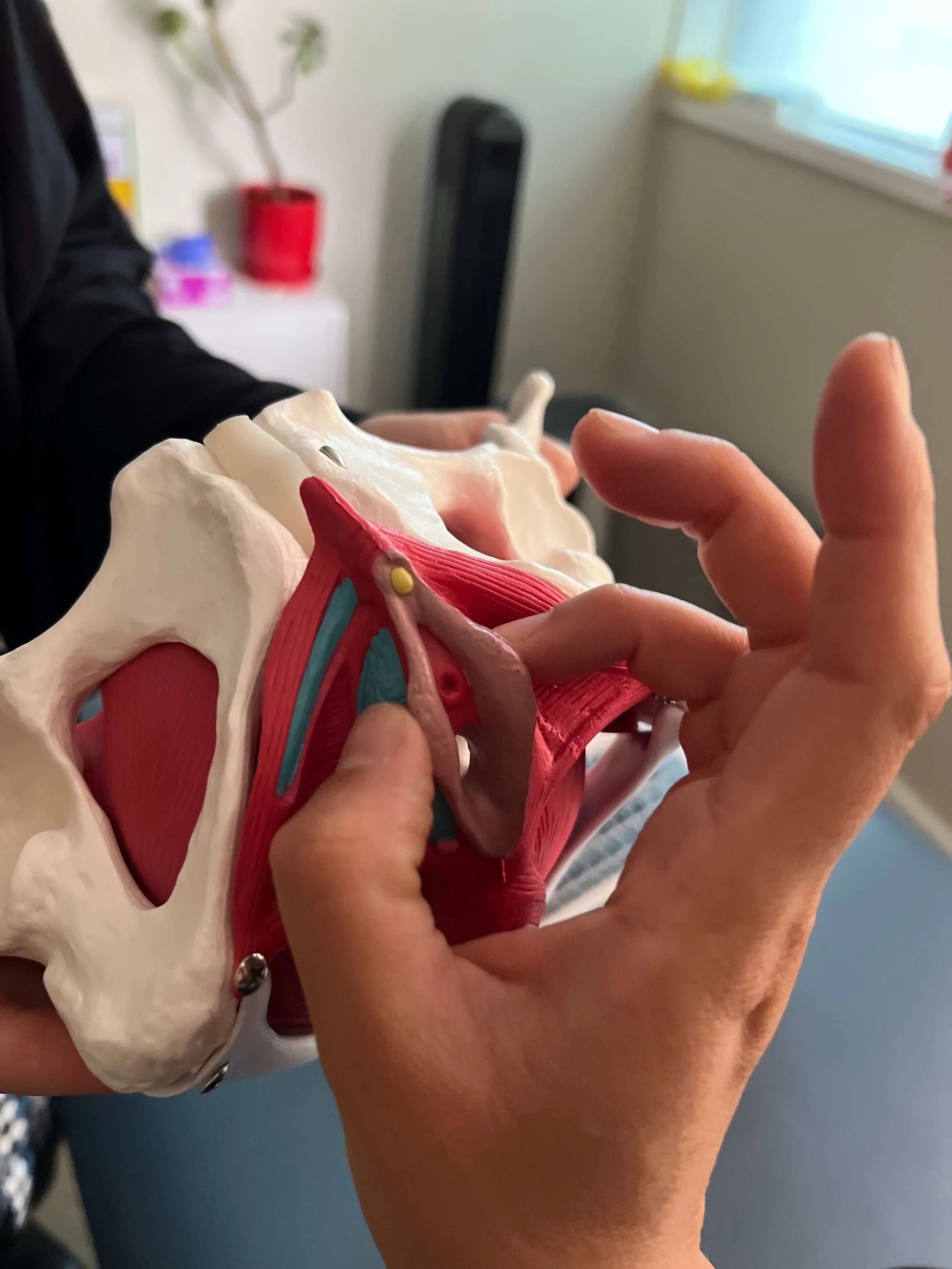
Urogenital Triangle Muscles
Possible Causes of Pelvic Floor Dysfunction
While tight or uncoordinated pelvic floor muscles can contribute to cramping after orgasm, the reasons those muscles became tight often vary.
Never Learning How to Relax the Pelvic Floor
In our culture, pelvic floor conversations often center around “Kegels”—constant lifting and contracting. Strengthening is not inherently harmful, but strength without relaxation does not create a healthy muscle. Only doing Kegels is like only doing hamstring curls and never stretching your hamstrings.
Stress and Nervous System Integration
The nervous system is deeply protective of the reproductive organs. The pelvic floor is often one of the first places the body contracts under stress—even when that stress is unrelated to the pelvis.
Learning to integrate these tension patterns starts with awareness. It is difficult to change something you cannot feel, visualize, or sense in your day-to-day life.
Dehydration and Poor Circulation
Without adequate hydration, tissues lose elasticity. In a sedentary culture where prolonged sitting is common, circulation to the pelvis can become limited, contributing to stiffness and discomfort.
Hormonal Changes
If you are on hormonal birth control or in perimenopause, estrogen and testosterone levels may be lower. These hormones play an important role in maintaining tissue hydration, circulation, and resilience in the pelvic floor.
Sexual or Medical Trauma
If you have experienced trauma involving the pelvis, the nervous system may respond by holding and protecting. A somatic and trauma-sensitive pelvic floor physical therapy approach can support safety, pacing, and regulation in a way that honors your lived experience.
How to Manage and Prevent Cramping After Orgasm
Breathing
There is a close relationship between the respiratory diaphragm and the pelvic floor. Diaphragmatic breathing can help the pelvic floor expand and relax when done with awareness.
You might notice whether you tend to hold your breath during intercourse or orgasm. Experimenting with gentle breathing during and after orgasm may reduce cramping.
Pelvic Floor Stretching
Stretching supports a healthy length-tension relationship in the pelvic floor. Child’s Pose can be a helpful option. Try taking 10 slow breaths in this position after orgasm to see if symptoms decrease.
Hydration
Adequate hydration supports tissue elasticity and circulation—and can positively affect sexual comfort and recovery.
Take Breaks From Sitting
If your work involves prolonged sitting, try changing positions at least once an hour. Rotating between seated, standing, or floor-based positions can improve pelvic circulation.
Somatic Movement Practices
If it feels available to you, notice moments to pause and tune into bodily sensation—either during the day or when cramping arises. Developing curiosity toward sensation can begin to shift long-standing tension patterns.
Learn more about our Somatic Movement Therapy options!
When To See a Pelvic Floor Physical Therapist?
If cramping after orgasm is persistent or severe, or if your symptoms also include pain with sex, urinary symptoms, or bowel dysfunction, your pelvic floor may be involved.
An evaluation with a pelvic floor physical therapist can help determine what your muscles, nervous system, and movement patterns need.
You can learn more about our pelvic floor physical therapy services here, which include trauma-sensitive, somatic-based care for pelvic pain and sexual dysfunction.
Virtual Pelvic Floor Therapy Is an Effective Option
You do not need to be physically in the clinic to receive meaningful pelvic floor care.
Virtual pelvic floor therapy allows us to work with:
Breathing and coordination
Pelvic floor relaxation strategies
Nervous system support
Pain education
Bladder and bowel retraining
Dilator education and coaching
Guided somatic movement
Bodyful offers online pelvic floor physical therapy to people throughout California, making care accessible from the comfort of your home.
For those outside of California, virtual somatic wellness visits are also available.
Somatic Pelvic Floor Therapy at Bodyful
A somatic pelvic physical therapist works with your whole story—your symptoms, beliefs, nervous system, and lived experience.
At Bodyful Physical Therapy & Wellness, we support you in learning how to connect with your pelvic floor, visualize it, support it, and restore coordination through integrative techniques and individualized movement.
Cramping after orgasm may be common, but it is not something you have to normalize.
If you are interested in working with a pelvic physical therapist using a somatic, trauma-sensitive approach, you can book a free 15-minute discovery call here.
Bodyful Physical Therapy & Wellness is located in Oakland, CA, serving the San Francisco Bay Area in person and offering virtual pelvic floor therapy throughout California.
Next on your reading list: