
Top 5 Prenatal Pelvic Floor Exercises to Include in Your Routine
Authored by Dr. Maryssa Steffen, PT, DPT, Board-certified Pelvic Health Clinical Specialist
Prenatal Pelvic Floor Physical Therapy and Leaking Pee During Pregnancy
What is the role of pelvic floor exercises during pregnancy?
“The biggest risk factor for urinary incontinence later in life is urinary incontinence during pregnancy.”
— Hage-Fransen et al., 2021
If you are pregnant and noticing urine leakage when you cough, sneeze, laugh, or lift, you are not alone. Leaking pee during pregnancy is common—but it is also very treatable with prenatal pelvic floor physical therapy.
Understanding why leakage happens is the first step toward changing it.
Why Does Leaking Pee Happen During Pregnancy?
Urine leakage during pregnancy often occurs because there is increased pressure from above the bladder. When you cough or sneeze, that pressure rises quickly. If your pelvic floor muscles and urinary sphincter cannot coordinate fast enough to counter that pressure, leakage can occur.
Pregnancy itself increases pressure in the abdomen—but posture and movement habits can amplify this effect.
Common Contributors
Prolonged sitting or computer work
Tension held in the neck, shoulders, and rib cage
Forward head posture and rib flare/open scissoring
Carrying toddlers or previous postpartum compensations
For example, when the head drifts forward and the shoulders stay tense, the abdominal muscles lose efficiency. The load of the head transfers downward, placing more demand on the pelvic floor and bladder. When a cough adds a sudden force, leakage can happen.
Prenatal PT addresses both pressure from above and pelvic floor response from below.
How Prenatal Pelvic Floor Physical Therapy Helps
Prenatal pelvic floor physical therapy looks at:
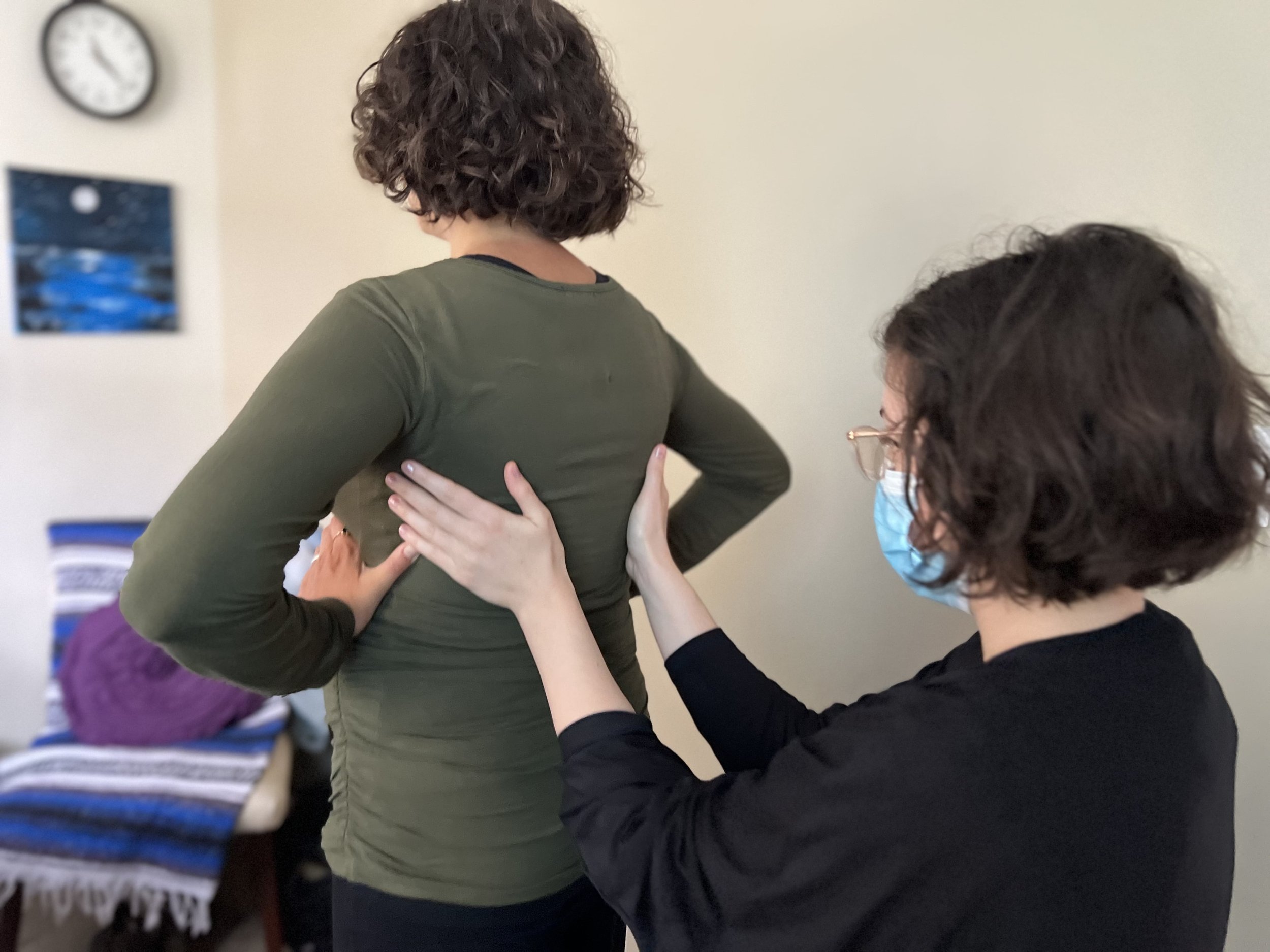
Posture and load transfers
Breathing strategies during effort
Core coordination
Pelvic floor strength and relaxation
If posture and breath coordination improve, strain on the bladder decreases. If pelvic floor timing improves, the urinary sphincter closes more effectively during sudden forces like coughing.
Both pieces work together.
Benefits of Pelvic Floor Strengthening During Pregnancy
Research supports pelvic floor muscle training as an effective prenatal intervention:
“Pelvic floor muscle training during pregnancy reduces urinary incontinence and lowers the risk of severe perineal tears.”
— Zhang et al., 2024
Prenatal pelvic floor physical therapy supports:
Reduced leaking pee during pregnancy
Improved coordination during coughing and lifting
Pelvic floor preparation for birth
More ease in postpartum recovery
Top Prenatal Pelvic Floor Exercises
These exercises are commonly used in prenatal PT to support bladder control, posture, and pelvic floor coordination.
1. Diaphragmatic Breathing
Place your hands on the sides of your lower ribs. Breathe into your hands while keeping your shoulders and chest still. Let your exhale be longer than your inhale. This breathing pattern helps manage pressure and supports pelvic floor function.
2. Modified Child’s Pose
Use bolsters, blankets, or a yoga ball for support. Separate your knees to make space for your belly. Rest and breathe until you feel softening through your pelvis. Muscles that can relax repeatedly often perform better when upright and moving against gravity.
3. Hands-on-Wall Squats
With hands on a wall and feet comfortably apart:
Feel your feet grounded
Elongate your spine
Sit back into an imaginary chair
Pause and breathe
Push through your feet to stand
You should be able to talk while doing this. Stop before fatigue.


4. Moderate-Intensity Movement
If cleared by your OB-GYN:
Aim for 30–40 minutes, 3x/week
Walking, swimming, and water aerobics are excellent options
You should be able to speak comfortably during activity
5. Prenatal Pelvic Floor Exercises (Kegels)
Pelvic floor exercises can be helpful when done with breath and coordination training.
Practice with an empty bladder
Gently contract the pelvic floor while breathing
Avoid holding your breath
Hum or sing to maintain ease
Hold up to 10 seconds if comfortable
Fully relax afterward (this is essential)
Quality matters more than quantity. Stop before fatigue.

How to Reduce Leaking Pee During a Cough
Before coughing, sneezing, laughing, or lifting:
Gently tense your pelvic floor one second before the effort
This anticipatory contraction supports the bladder and reduces leakage. Prenatal PT helps train this timing specifically and effectively.
When to Seek Prenatal Pelvic Floor Physical Therapy
Consider prenatal PT if:
Leaking persists despite pelvic floor muscle exercises
Leakage worsens with activity
You feel unsure how to coordinate breathing and effort
You want support preparing for birth and postpartum recovery
Prenatal pelvic floor physical therapy offers individualized assessment, education, and exercise progression tailored to your pregnancy.
Prenatal PT in Oakland and California Telehealth
If you are in California, you can work with a pelvic floor physical therapist through in-person prenatal PT in Oakland or Telehealth prenatal pelvic floor physical therapy.
Bodyful Physical Therapy and Wellness supports pregnancy, birth preparation, and postpartum recovery with individualized, whole-body care.
You can book a free 15-minute discovery call to learn more about prenatal pelvic floor physical therapy and leaking pee during pregnancy.